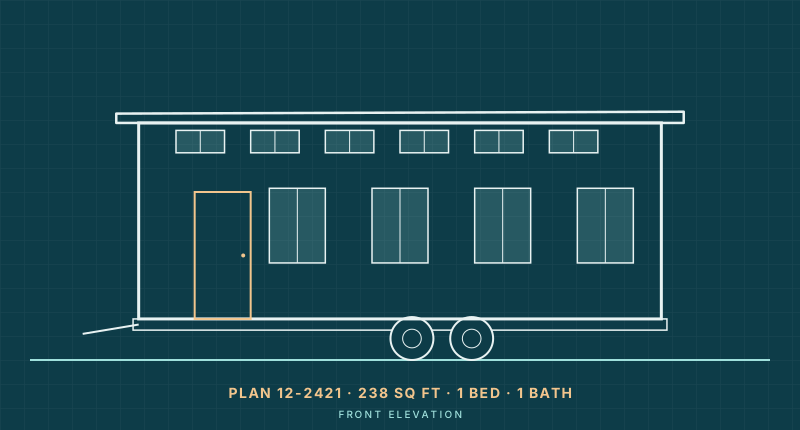
Plan 12-2421
The Kestrel: 28 ft Tiny House on Wheels with Main-Floor Bedroom
- 238 sq ft
- 1 bed
- 1 bath
- On wheels
$495View plan

Placement
Backyards, rural land, RV parks, tiny home communities and five more options, with the rules that usually apply to each and what you pay for in each case.
Where to put a tiny house comes down to nine common options: your backyard as an ADU, rural land you own, a tiny home community, an RV park, a mobile home park, family land, leased land, a farm, or a small lot zoned for small homes. Which are legal depends on local zoning and whether your house has wheels.
Finding a place is the hardest part of tiny living for a lot of people, and it is the step most often left until too late. The house is the easy part; the land and the permission are what take time. Below is each option, how it usually works, and the questions to ask before you commit.
Where you can put a tiny home depends first on how it is built. A house on a trailer and a house on a foundation are regulated differently, so they end up in different places.
Our tiny house zoning laws guide explains the RV and building code side in depth. If you are still deciding between wheels and a foundation, this decision is a good reason to settle it early: are tiny homes considered mobile homes? covers how wheeled homes are classified.
If you already own a house, an accessory dwelling unit (ADU) behind it is often the most straightforward legal route, and many states and cities have loosened ADU rules in recent years. Expect rules on size, setbacks, height and utilities, and possibly owner-occupancy or parking. A foundation tiny home is usually the easiest to approve; some places now allow a tiny house on wheels as a backyard unit. Our post can I put a tiny home in my backyard? walks through the approval steps.
Buying land gives you the most control, and rural counties are more likely to allow small homes or RV living. But rural does not mean unregulated: many rural zones still set a minimum dwelling size, limit how long an RV can be occupied, or require septic approval before anyone lives on the site. Research the specific parcel before you buy, including road access, well and septic feasibility, and power.
Tiny home communities do the zoning work up front, usually operating as an RV park, a manufactured home community or a planned development. You rent or buy a pad with hookups and follow community rules, which often include RV or park model certification for wheeled homes and limits on size or appearance. If none exist near you, how to start a tiny home community explains what is involved.
RV parks are set up for wheeled homes, with water, sewer and power at each site. Many offer monthly rates, and some welcome tiny houses. Others limit stays, require RV certification or restrict homemade units, and some campgrounds close seasonally. Call ahead and ask specifically about tiny houses, not just RVs.
Some manufactured home communities accept tiny houses, especially park model RVs. Lots tend to be larger than RV sites and leases longer. Policies vary a lot, and some parks accept only HUD-code manufactured homes, so ask before you assume.
Parking on a relative's or friend's property is popular because it is cheap and flexible. Whether it is legal depends on whether that lot allows a second dwelling or RV occupancy. If it allows an ADU, a foundation home may be possible; if not, an occupied tiny house on wheels could draw a complaint. Put the arrangement in writing, including utilities, access and what happens if either of you wants to end it.
Some landowners lease a corner of their property for a tiny house, an arrangement sometimes called a land lease. It can work well, but the land still has to be zoned for what you are doing. A written lease should cover term, rent, utilities, insurance, improvements and removal when the lease ends.
Farms sometimes host tiny houses in exchange for rent or work. Agricultural zoning occasionally allows additional dwellings for farm workers or family, which can open a legal path that would not exist on a residential lot. Ask the county how a second dwelling is classified on that specific parcel.
A growing number of cities allow small homes on small lots, cottage clusters or pocket neighborhoods, sometimes with lowered minimum dwelling sizes. A foundation tiny home or small cottage can then be a primary home on its own lot. If you are thinking of grouping several units, see how many tiny homes can fit on an acre.
| Option | Best fit | What you pay for | Main hurdle |
|---|---|---|---|
| Backyard ADU | Foundation (wheels in some areas) | Permits, utility connections, possible impact fees | ADU rules and setbacks |
| Rural land you own | Either | Land, well or water, septic, power, road access | Minimum size and RV limits |
| Tiny home community | Either | Lot rent or lot purchase, community fees | Availability and certification rules |
| RV park or campground | Wheels | Monthly site rent, metered utilities | Stay limits, homemade-unit rules |
| Mobile home park | Wheels or park model | Lot rent | Park acceptance policy |
| Family or friends' land | Either | Utilities, any agreed rent | Second-dwelling rules |
| Leased land | Either | Ground rent, utility hookups | Zoning and lease terms |
| Farm or homestead | Either | Rent or work exchange | Agricultural dwelling rules |
| Small lot | Foundation | Land, permits, utility connections | Finding a lot and zoning that fit |
Rents, land prices and fees vary widely by region, so get local quotes rather than relying on averages. For the cost of the house itself plus site work and utilities, see how much a tiny house costs; if you will move the home between spots, the cost to move a tiny home is worth budgeting too.
Where can you park tiny homes for the long term? The realistic answers are RV parks, tiny home communities, and private land where full-time RV occupancy is allowed. Short-term, while traveling or between sites, RV parks and campgrounds that accept tiny houses are the safest choice. Parking overnight in public places or on streets is often restricted, and a tiny house is heavier and taller than most RVs, so check clearances and access before you tow.
Plenty of people park on private land informally and never have a problem, until a neighbor complains. If a site is not clearly legal, the risk is being told to move on short notice. Ask the planning office about the parcel, and get any landowner agreement in writing. Rules vary; check with your local planning office.
If you have not built yet, design for where the house will live. Our tiny house on wheels plans stay within road limits, and our ADU plans are drawn for backyard lots. Three examples from the Tiny Homes Blueprint catalog, one for each main path:
Plan 12-2421
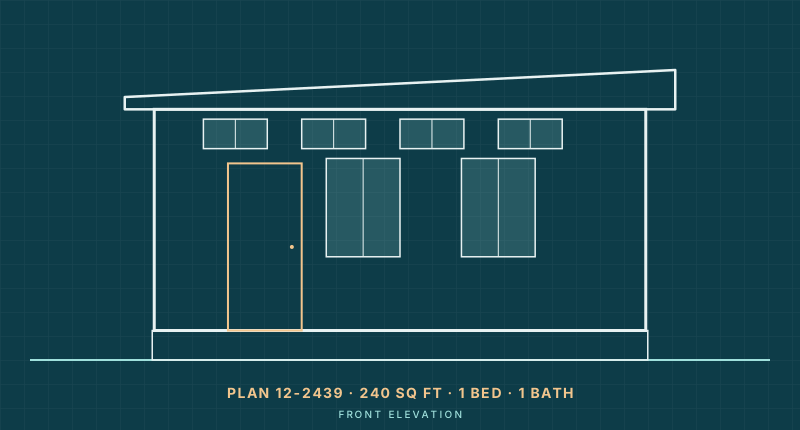
Plan 12-2439
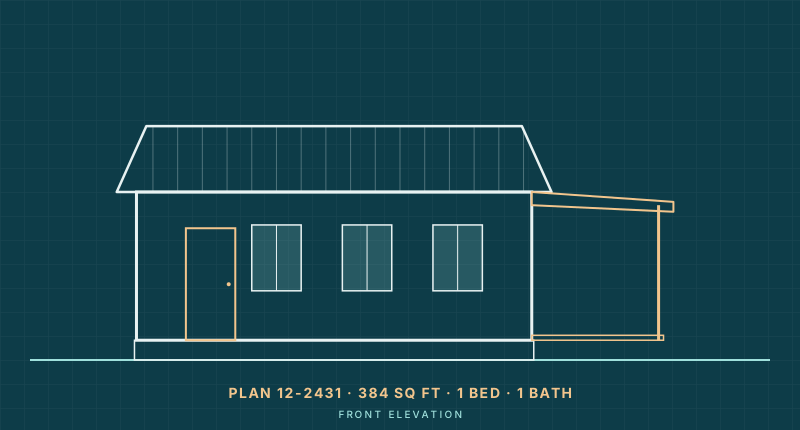
Plan 12-2431
We may earn a commission from qualifying Amazon purchases made through these links, at no extra cost to you.
Once you have a site, the size of the spot often decides the size of the house. The size calculator helps match the two.
Often, but it depends on zoning. A foundation tiny home needs a district where a dwelling of that size is allowed as a primary home or ADU. A tiny house on wheels needs rules that allow living in an RV on private land, which many places limit. Check with your local planning office for the specific parcel.
Some rural counties have little or no zoning, but building codes, septic and health rules, and state laws may still apply. "No zoning" rarely means no rules, so confirm with the county building and health departments before you move in.
Many RV parks accept tiny houses on wheels, especially ones certified as RVs or park models. Some do not accept homemade or uncertified units, and some limit stays. Ask the park directly about tiny houses.
Only if the lot allows a second dwelling or RV occupancy. If it allows ADUs, a permitted foundation tiny home may be possible. Without that, living in a tiny house on wheels in a backyard can lead to code enforcement if someone complains.
For a tiny house on wheels, an established tiny home community or RV park that accepts tiny houses is usually easiest. For a foundation tiny home, a backyard ADU on a lot where ADUs are allowed is often the simplest route.
This article is general information, not legal advice. Rules vary and change; confirm locally before you buy land, build or move in.
Tiny Homes Blueprint designs tiny houses on wheels, cabins and ADUs, and can adjust a plan for your site and local rules.