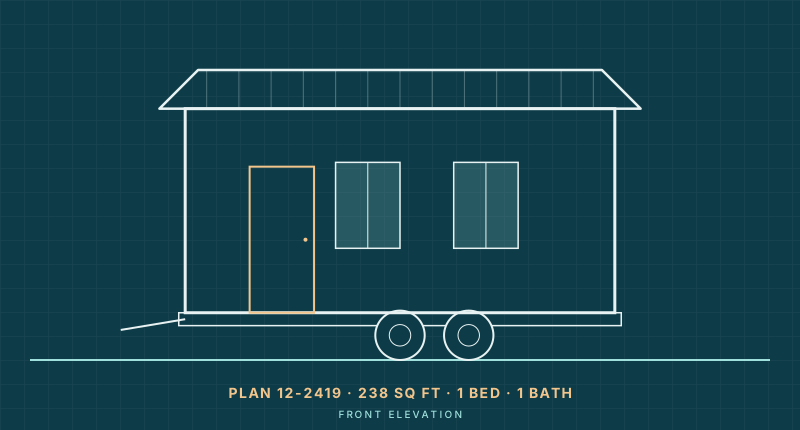
Plan 12-2419
The Wren: 20 ft Tiny House on Wheels with Sleeping Loft
- 238 sq ft
- 1 bed
- 1 bath
- On wheels
$395View plan

Costs
Per-mile towing rates, minimum charges, oversize permits, setup and utility hookups, and what it really takes to tow a tiny house yourself.
How much does it cost to move a tiny home? Professional towing for a tiny house on wheels typically runs roughly $1 to $5 per mile, often with a minimum charge for short trips. Oversize permits, escort vehicles, setup and utility reconnection come on top, so a short local move might cost a few hundred dollars while a cross-country move can run into the thousands.
Tiny house transport cost depends on distance, the size and weight of the house, whether it fits within legal road limits, and how much work the new site needs. Below we break down each piece, show what typical distances cost, and cover the real requirements for moving a tiny house yourself.
Most moves are built from the same handful of items. The figures below are typical estimates for a tiny house on wheels; quotes vary by region, season, mover and route, so get several written quotes.
| Cost item | Typical estimate | When it applies |
|---|---|---|
| Professional towing | Roughly $1 to $5 per mile | Every hired move; heavier and larger homes sit at the higher end |
| Minimum or flat fee | Varies by mover | Short moves, where per-mile pricing alone would be very low |
| Oversize permits | Varies by state and load | Homes over legal width, height, length or weight limits; one permit per state crossed |
| Escort or pilot vehicles | Often billed per mile or per day | Wider loads, as required by each state |
| Pre-move prep | DIY time to a service call | Tire, brake, bearing and light checks; securing contents |
| Setup and leveling | Often a few hundred dollars and up | Every move; more if site work or a pad is needed |
| Utility reconnection | Varies with site and trades needed | Water, sewer or septic, power and propane at the new site |
| Transit insurance | Varies | Check the mover's coverage and your own policy |
Using the typical $1 to $5 per mile range, here is what the towing portion alone looks like for common move lengths. Movers may also charge for their return trip or deadhead miles, so ask how the mileage is counted.
Where a house falls in that range usually comes down to its size and weight, the type of hitch, how remote the pickup and delivery sites are, and whether the route involves mountains, tolls or oversize restrictions. A 20 ft home with a bumper-pull hitch generally costs less to tow than a 32 ft gooseneck. To understand what you are asking a mover to pull, see how much tiny homes weigh. How the home is classified also matters to movers and insurers; our guide on whether tiny homes are considered mobile homes explains the RV, HUD and site-built categories.
In most states, a towed load up to 8.5 ft wide and 13.5 ft tall can travel without a special permit, subject to length and weight limits that vary by state. Go past those limits and the house becomes an oversize load. That typically means a permit from every state on the route, travel restricted to certain days and hours, specific routes, signage and flags, and, for wider loads, one or more escort vehicles. Each of those adds cost and planning time.
This is why most tiny houses on wheels are designed to stay within road limits from the start. The tiny house trailer size guide explains the width, height, length and weight numbers in detail, and every Tiny Homes Blueprint tiny house on wheels plan is drawn 8.5 ft wide and 13 ft 6 in. tall to fit them.
Size, weight, permit and escort rules are set by each state and can change. Check with the transportation department in every state you will cross, or use an experienced mover who handles permits. This article is general information, not legal advice.
Moving a tiny house does not end at the curb. At the new site, expect to:
Before you go, confirm the new spot is legal and has the hookups you need. Our guide on where to put a tiny house covers the options, and tiny house zoning laws explains the rules. If the house sits on a permanent foundation, the job is very different: it may require a structural house mover, a crane and new foundation work, which costs far more than towing a THOW.
Towing your own tiny house can save the mover's fee, but only if you have the right equipment and experience. Many tiny houses on wheels weigh as much as a large travel trailer or more. At minimum you need:
Use the trailer weight calculator to estimate your home's loaded weight and check it against the trailer's rating before you hook up. If you have never towed a heavy trailer, hiring a professional for the first move is usually the safer choice.
These Tiny Homes Blueprint plans are designed as tiny houses on wheels within typical road limits:
Plan 12-2419
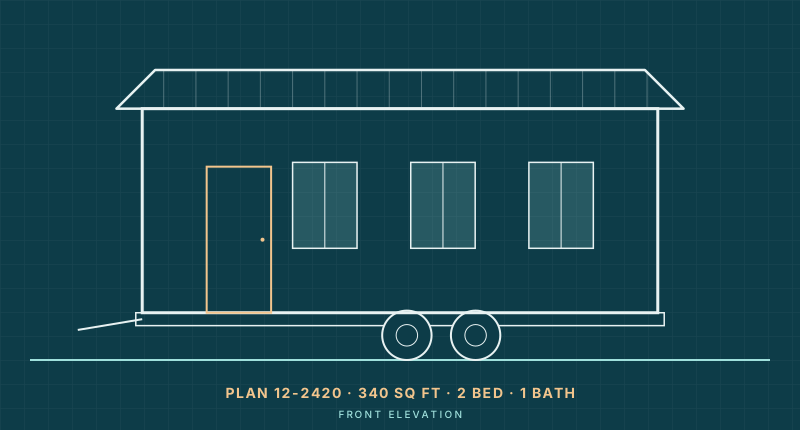
Plan 12-2420
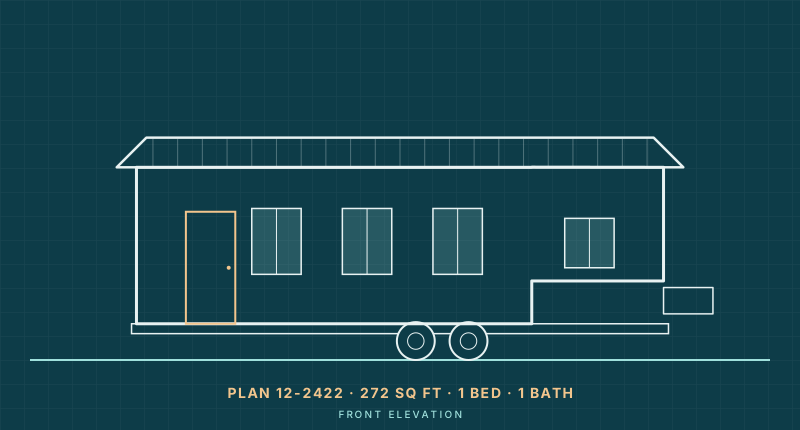
Plan 12-2422
For the cost of the house itself, rather than the move, see how much a tiny house costs.
As a typical estimate, professional tiny house towing runs roughly $1 to $5 per mile, often with a minimum charge. Larger, heavier and oversize homes, remote locations and difficult routes tend to cost more.
Usually not if the house is within legal road limits, which in most states means about 8.5 ft wide and 13.5 ft tall plus state length and weight limits. Homes that exceed those limits typically need oversize permits from each state on the route, and sometimes escort vehicles.
Only if the truck, hitch and brakes are rated for the home's loaded weight with margin. Many tiny houses on wheels need a heavy-duty pickup. Estimate the weight with a trailer weight calculator and check your truck's towing and combined weight ratings.
Much more than towing a tiny house on wheels. It typically involves a structural house mover or crane, a transport trailer, permits and a new foundation at the destination. Get a site visit and written quote from a licensed mover.
Local moves can happen in a day once the site is ready. Long-distance moves depend on the distance, permit restrictions on travel days and hours, and weather. Allow extra time for permits, setup and utility reconnection.
Costs are typical estimates and vary by mover, region and route. Transport rules vary by state; confirm before you move.
Tiny Homes Blueprint THOW plans are drawn to typical road limits, so your home can travel without oversize headaches.