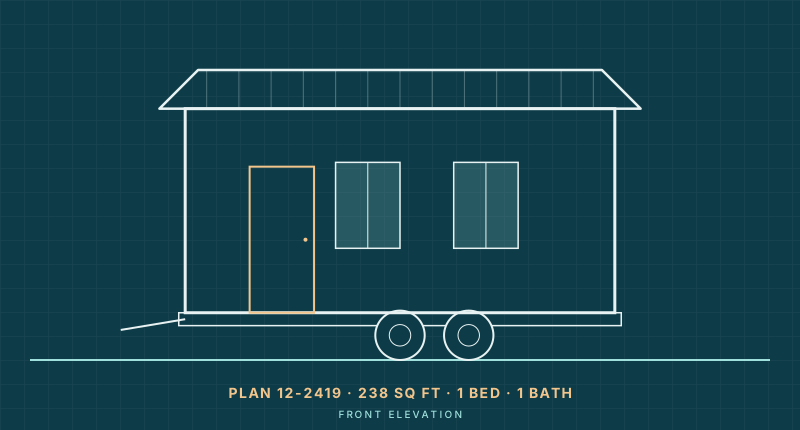
Plan 12-2419
The Wren: 20 ft Tiny House on Wheels with Sleeping Loft
- 238 sq ft
- 1 bed
- 1 bath
- On wheels
$395View plan

Building
Typical weights for 16 to 32 ft tiny houses on wheels, where the pounds actually come from, how weight relates to trailer GVWR and tongue weight, and practical ways to build lighter.
How much do tiny homes weigh? A finished tiny house on wheels typically weighs about 400–600 lb per linear foot of trailer, including the trailer itself. That puts a 20 ft home around 8,000–12,000 lb and a 24 ft home around 10,000–14,000 lb. Materials, lofts, water and belongings decide where in that range yours lands.
Weight matters more than almost any other number in a mobile tiny home. It decides which trailer and axles you need, what truck can tow it and how much margin you have for the things you own. Here is how tiny house weight breaks down, and how to estimate yours before you build.
Length is the best single predictor of how much a tiny home weighs, because nearly every component, from the trailer frame to the siding, scales with it. The ranges below apply the 400–600 lb per foot rule to common trailer lengths. They are planning estimates for finished, furnished homes, not guarantees.
| Trailer length | Typical finished weight | GVWR to consider | Notes |
|---|---|---|---|
| 16 ft | ~6,500–9,500 lb | 10,000 lb | Lightest and easiest to tow |
| 20 ft | ~8,000–12,000 lb | 10,000–14,000 lb | Light builds can fit a 10,000 lb trailer |
| 24 ft | ~10,000–14,000 lb | 14,000–16,000 lb | Most common full-time size |
| 28 ft | ~11,000–17,000 lb | 16,000 lb or more | Room for a main-floor bedroom |
| 32 ft (often gooseneck) | ~13,000–19,000 lb | 16,000–21,000 lb | Usually moved rarely, often by a pro |
For trailer lengths, widths and ratings in more depth, see the tiny house trailer size guide. To estimate your own design by framing, siding, roofing and contents, use the free tiny house trailer weight calculator.
To see how a tiny home adds up, here is the calculator's default estimate for a 24 ft bumper-pull build with 2x4 walls, wood siding, a metal roof, pine interior, one loft, empty water tanks and 1,000 lb of belongings. It comes to roughly 12,800 lb, or about 530 lb per foot.
Two things stand out. The trailer is the single heaviest component, and the structure and finishes together outweigh it by a wide margin. That means material choices, not just length, decide whether a home lands at the light or heavy end of the range.
The trailer's gross vehicle weight rating (GVWR) is the maximum it is rated to carry in total: trailer, house and everything inside. Exceeding it overloads axles, tires and brakes. Plan to keep your loaded weight at least 10–15% under the rating, because builds almost always come in heavier than the first estimate.
Weight also determines the tow vehicle. On a bumper-pull trailer, roughly 10–15% of the total weight typically rests on the hitch as tongue weight; on a gooseneck, around 15–25% sits on the truck bed as pin weight. Both count against the truck's payload, alongside its towing capacity and combined weight rating. Many heavier homes call for a heavy-duty pickup or larger, and some states have licensing requirements above certain combined weights, so check with your DMV. If you will only move the house once or twice, hiring a professional hauler is often simpler; see how much it costs to move a tiny home.
Pick your trailer rating after you estimate weight, not before. Upgrading axles after the house is framed is expensive, and an overloaded trailer is a real safety risk on the road.
Most of the questions about how much a tiny home weighs come from people with homes on wheels, because that is where weight sets hard limits. For other types:
Estimates are only a starting point. Once the home is finished, take it to a certified public scale, such as those found at many truck stops and some scrap or landscape yards. Weigh the whole rig, then the truck alone, to find the trailer weight; scales that weigh each axle separately also show your tongue weight and balance. Weighing the bare trailer before you build gives you a baseline for tracking weight as the house goes up.
Designing for weight from the start is easier than fixing it later. Every Tiny Homes Blueprint plan on wheels is drawn around road limits, and the smallest is drawn to suit a 10,000 lb GVWR trailer:
Plan 12-2419
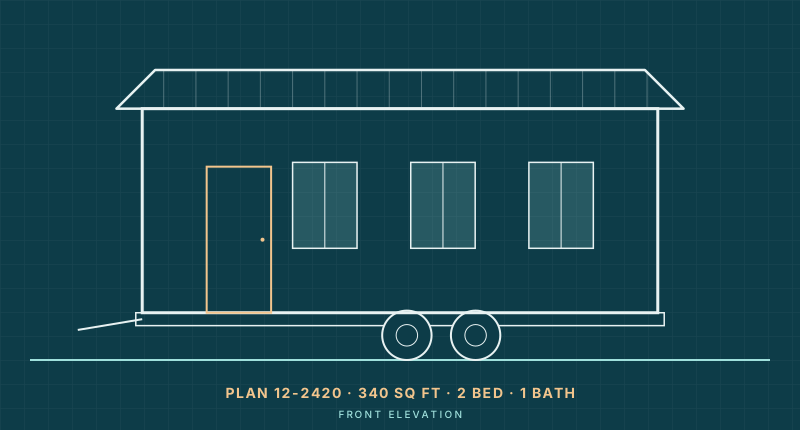
Plan 12-2420
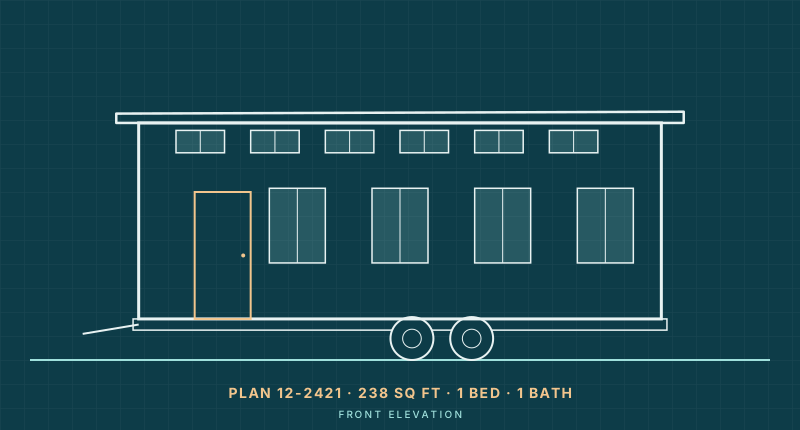
Plan 12-2421
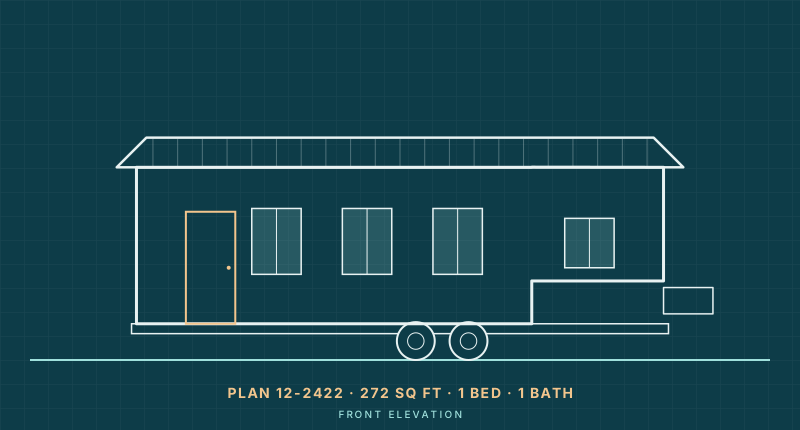
Plan 12-2422
Building one yourself? Follow our step-by-step tiny house build guide, and budget the trailer and materials with the tiny house cost guide.
A typical finished tiny house on wheels weighs about 400–600 lb per foot of trailer including the trailer, so most land somewhere between roughly 8,000 and 14,000 lb at the common 20–24 ft lengths. Longer and heavier-built homes can approach 19,000 lb or more.
Usually about 10,000–14,000 lb finished and furnished, including the trailer. That is why most 24 ft builds use a trailer rated for at least 14,000 lb GVWR, and heavier builds a 16,000 lb trailer.
An empty purpose-built tiny house trailer often weighs roughly 2,000–5,000 lb depending on length, axle rating and construction. Goosenecks are heavier for their length.
Rarely. Most finished tiny houses on wheels exceed what a typical half-ton pickup is rated to tow, especially once tongue weight is counted against payload. Check your truck’s actual towing, payload and combined weight ratings against a real estimate of your home’s weight.
Keep it short, use steel or 2x4 framing, metal roofing and light siding, skip drywall and stone, limit lofts and tow with empty tanks. Run your design through the trailer weight calculator to compare options.
Start from a Tiny Homes Blueprint plan on wheels drawn around road limits, or ask us to adapt one for a lighter build.