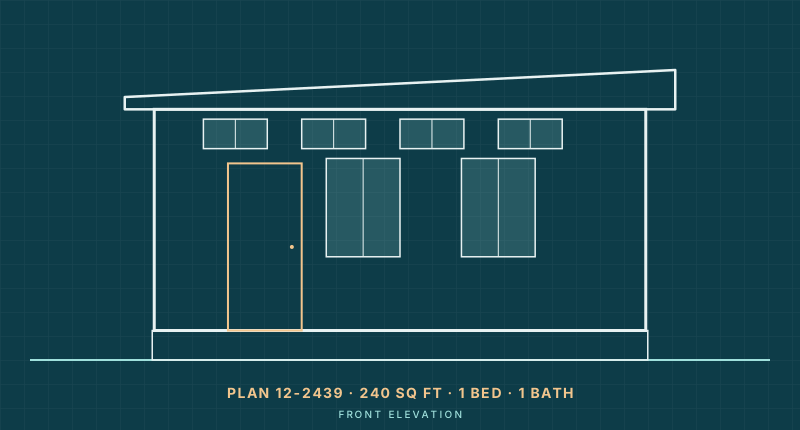
Plan 12-2439
The Studio Flex: 12 x 20 Backyard Studio and Office ADU
- 240 sq ft
- 1 bed
- 1 bath
- 1 level
$395View plan

Buying
An honest, numbers-first look at whether a tiny home pays off: what you save, what you give up, whether tiny homes appreciate, how resale really works and how to run the math for your own situation.
Are tiny homes worth it? For many people, yes, if the goal is low housing costs, little or no debt and a legal place to live. As a pure investment, they are usually weaker than a conventional house: tiny homes on wheels tend to depreciate like RVs, while a tiny home on land you own can hold or gain value, mostly because of the land.
So the honest answer depends on what "worth it" means to you. If you are measuring monthly cash flow and freedom from a mortgage, a tiny home can be one of the best housing deals available. If you are measuring long-term wealth building through appreciation, it often is not. This guide separates those two questions and walks through the trade-offs.
The financial case for a tiny home rests on total cost, not cost per square foot. Per foot, tiny homes are expensive: kitchens, bathrooms, windows and systems are packed into very little floor area. Owner-built tiny homes typically run around $150–330 per sq ft and builder-made homes around $250–500 per sq ft, depending on finish. But multiplied over 200 or 300 sq ft, that is still a fraction of what a conventional house costs. Our tiny house cost guide has the full line-by-line breakdown.
The bigger long-term win is often the smaller or nonexistent loan. A home you can pay for in cash, or pay off in a few years, frees up money every month that would otherwise go to mortgage interest or rent. Smaller homes also cost less to heat, cool, insure, maintain and furnish. Those lifestyle benefits are covered in the advantages of compact living; here, we focus on value.
When people ask Tiny Homes Blueprint whether a tiny home is a good investment, we suggest splitting it into two assets: the structure and the land it sits on. Houses of every size tend to wear out and lose value as structures; it is usually the land underneath that appreciates. A conventional home bundles both. Many tiny homes, especially those on wheels, are only the structure.
That is why the type of tiny home matters so much to whether it is a good investment:
| Type | Usually treated as | Value over time | Financing | Resale market |
|---|---|---|---|---|
| Tiny house on wheels (certified) | RV or park model | Tends to depreciate | RV or personal loans, often higher rates | Niche buyers; can be sold anywhere it can be moved |
| Tiny house on wheels (DIY, uncertified) | Trailer or unclear | Often depreciates fastest | Hard to finance | Smallest pool of buyers |
| Foundation tiny home on owned land | Real property | Can track the local market, mainly via the land | Mortgages possible, but appraisals can be tricky | Buyers who want a small home in that area |
| Backyard ADU | Part of the main property | Can add value to the whole lot | Cash-out refinance, HELOC, construction loans | Sold with the main house |
Rental income is the other investment angle. A tiny home used as a long-term rental or a short-term vacation rental can produce cash flow, but income depends heavily on location, and many jurisdictions restrict short-term rentals or require owner occupancy for ADUs. Treat any rental plan as a business plan and check local rules first. For classification details, see are tiny homes considered mobile homes?
Tiny homes on wheels generally do not. Like RVs and vehicles, they are usually personal property, and their value tends to fall with age and wear. A well-built, certified THOW from a respected builder may hold value better than a DIY build, but buyers still compare it to new models.
Tiny homes on foundations can, because they are real property and the land under them can appreciate with the local market. Two cautions, though. First, appraisers rely on comparable sales, and there may be few or no comparable tiny homes nearby, which can make appraisals and mortgages harder. Second, the buyer pool for a very small primary home is narrower than for a typical house. An ADU avoids much of that problem, since its value is folded into the main property, where it can add rental potential or space for family.
Selling a tiny home is usually slower and less predictable than selling a standard house. Expect buyers to ask about certification, the trailer and its weight rating, how the home was insulated and ventilated, and whether it has a legal place to go. Homes with documentation, such as plans, inspection records, RV or park model certification and receipts for major components, are easier to sell. Homes on wheels have one resale advantage: you can sell to a buyer anywhere, not just locally, although moving the house adds cost; see how much it costs to move a tiny home.
A simple break-even comparison tells you more than any general rule. Add up the full cost of the tiny home (house, trailer or foundation, land or site work, utilities and permits), then compare it to what you currently spend on housing each month, minus the tiny home's ongoing costs.
Say a finished tiny home costs $60,000 all in, and you pay $500 a month for a lot plus utilities. If you currently pay $1,800 a month in rent, you save about $1,300 a month, so the home pays for itself in roughly 46 months, ignoring financing, maintenance and resale. Swap in your own numbers; the tiny house cost calculator helps you estimate the build side.
Then stress-test it. What if you need to move in three years? What if the home sells for half what you paid? If the answer still works for you, the financial case is solid.
If you decide it is worth it, a well-documented, buildable plan protects your investment. These Tiny Homes Blueprint plans cover the options with the best value prospects, from a backyard ADU to a cottage on its own lot:
Plan 12-2439
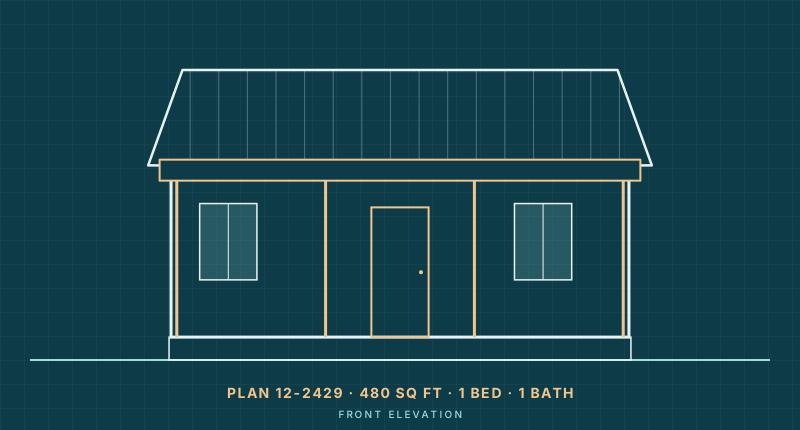
Plan 12-2429
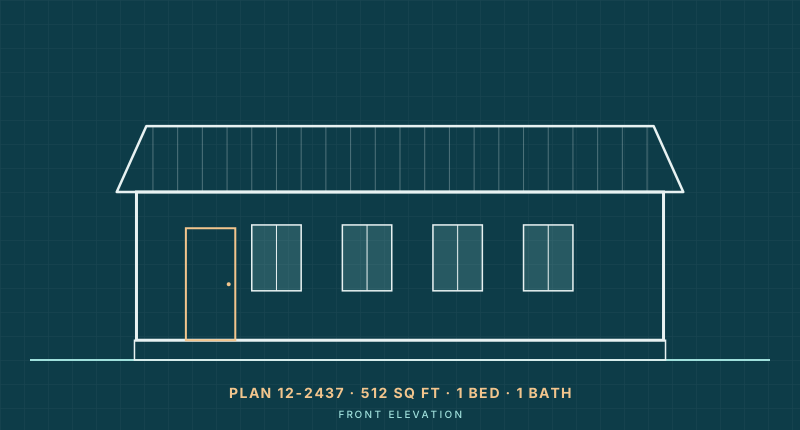
Plan 12-2437
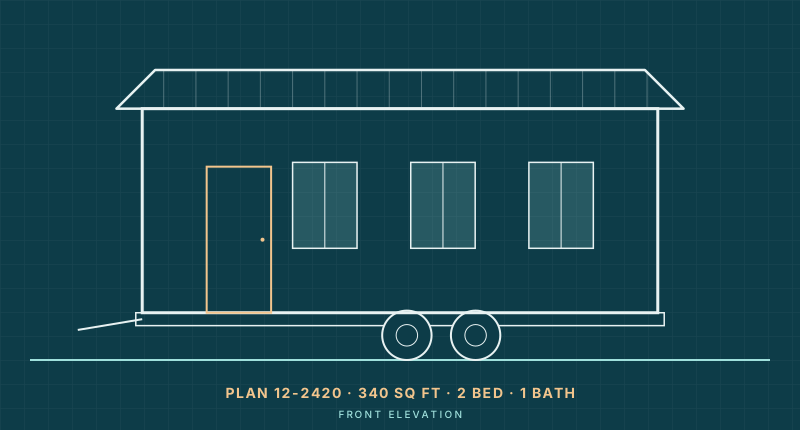
Plan 12-2420
Ready for the next step? Read how to buy a tiny house or how to build a tiny house.
As a pure investment, usually not as good as a conventional home, because many tiny homes, especially those on wheels, depreciate. They can be a good financial decision when they sharply cut your housing costs, or when built as an ADU on property you own, where they may add value and rental potential.
Tiny homes on wheels generally lose value over time, like RVs. Tiny homes on a permanent foundation on land you own can appreciate along with the local market, mostly because of the land, though appraisals can be harder due to few comparable sales.
Usually, yes. The home itself costs far less in total than a conventional house, and utilities, maintenance and insurance are typically lower. Lot rent, land, utilities hookups and financing costs can narrow the gap, so add them up before deciding.
They can be. The buyer pool is smaller, financing is harder for buyers, and homes without certification or documentation are tougher to sell. Homes on wheels can be sold to buyers anywhere, but moving them adds cost.
For homes on wheels, depreciation combined with the cost of land or lot rent. For any tiny home, the biggest risk is not having a legal, affordable place to put it, which can force a costly move or sale.
Start with a build-ready plan from Tiny Homes Blueprint, sized for your land, your budget and your local rules.