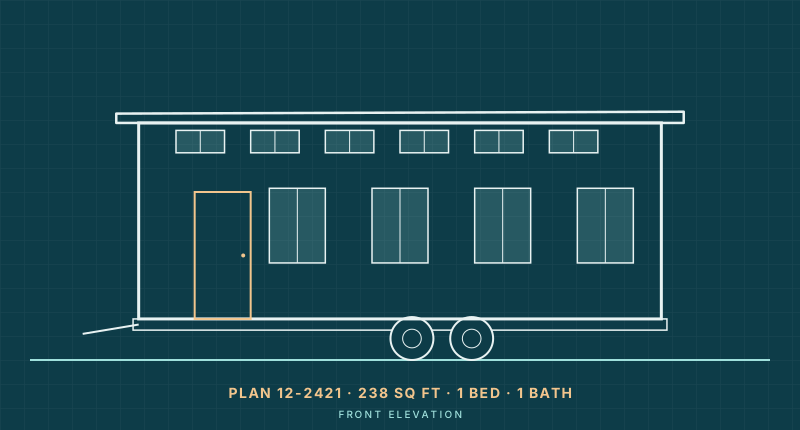
Plan 12-2421
The Kestrel: 28 ft Tiny House on Wheels with Main-Floor Bedroom
- 238 sq ft
- 1 bed
- 1 bath
- On wheels
$495View plan

Buying
Which tiny home loans fit which kind of tiny house, what lenders look for, and how to match your financing to wheels, a foundation or a backyard ADU.
How do you finance a tiny home? It depends on how the home is built. A certified tiny house on wheels can often use an RV loan; an uncertified or DIY build usually relies on a personal loan or cash. A tiny home on a permanent foundation may qualify for a construction loan and mortgage, and a backyard ADU is often funded with home equity.
Tiny house financing is harder than financing a standard house because many lenders do not know how to classify a 250 sq ft home. The trick is to choose the home type and the loan together. Below are the seven main routes, what each is good for and what to watch.
Two questions narrow the field quickly: is the house on wheels or on a foundation, and if it is on a foundation, is it going behind a home you already own? The flowchart below shows the usual starting point for each answer.
Not sure which type suits you? Our guides on whether tiny homes are considered mobile homes and tiny house zoning laws explain how the classification is decided, and it matters to lenders as much as to the county.
Rates and terms move with the market and depend heavily on your credit, income and the property, so the comparison below is qualitative. As a broad rule, loans secured by real estate tend to cost less than secured vehicle-style loans, which tend to cost less than unsecured personal loans.
| Option | Best for | Collateral | Relative cost | Main hurdle |
|---|---|---|---|---|
| RV loan | Certified tiny house on wheels | The home | Moderate | Requires RV certification |
| Personal loan | DIY or uncertified builds, smaller budgets | None (unsecured) | Higher | Loan size limits, shorter terms |
| Construction loan | Building a foundation home on your land | Land and home | Moderate | Plans, budget, builder and permits needed |
| Mortgage | Finished foundation home that is real property | Land and home | Lower | Appraisal, minimum loan amounts |
| HELOC or cash-out refinance | Backyard ADU at your existing home | Your main home | Lower to moderate | Needs equity; puts your home at risk |
| Builder or manufacturer financing | Buying from a builder who offers it | Varies | Varies widely | Compare against outside offers |
| Cash and savings | DIY builds, phased projects | None | No interest | Time to save; ties up reserves |
If a tiny house on wheels is built and certified to a recognized RV standard, many banks, credit unions and RV lenders will treat it like a travel trailer. RV loans usually ask for a down payment and can run longer terms than personal loans, which keeps monthly payments lower. The catch is certification: most self-built THOWs cannot get it after the fact. If you plan to buy from a builder, ask whether the home will carry a certification label and confirm with a lender before you sign.
Unsecured personal loans do not care what the house is, which makes them the default for DIY builds, shells and uncertified homes. Approval is often quick and funds can arrive as a lump sum. The trade-offs are higher typical rates than secured loans, loan amounts that may not cover a full build, and terms that commonly run only a few years, which raises the payment. Some people combine a smaller personal loan with savings.
For a tiny home on a permanent foundation, a construction loan pays out in stages (draws) as work is completed and inspected. Lenders typically want a complete set of plans, a detailed budget, a licensed builder and permits. Many convert to a permanent mortgage when the house is finished, a structure often called construction-to-permanent. Small projects can run into lender minimum loan amounts, so ask early. A build-ready plan and a line-item budget make your application stronger; our how to build a tiny house guide lays out the phases lenders will expect to see.
A tiny home that is permanently attached to land you own, permitted and built to the local code is real property, so a mortgage may be possible. The obstacles are practical: appraisers may struggle to find comparable sales for very small homes, and some lenders set minimum loan amounts or property standards that a tiny home does not meet. Larger tiny homes and small cottages tend to fit conventional lending more easily than micro homes.
If you own a home with equity, a home equity line of credit (HELOC), home equity loan or cash-out refinance can fund a backyard tiny home. Because the loan is secured by your main house, costs are usually lower than unsecured borrowing, and a HELOC lets you draw money as the build progresses. The risk is real: missed payments put your primary home on the line. Confirm that your lot allows an ADU first; see can I put a tiny home in my backyard?
Some tiny home builders offer in-house financing or refer buyers to lending partners. This can simplify the process, especially for certified homes. Treat it like any other offer: compare the total cost of borrowing, fees and terms against at least one outside quote, and read the contract terms on deposits, delivery dates and what happens if the build is delayed.
Paying cash avoids interest entirely, and tiny homes are one of the few houses where that is realistic for many people. DIY builders often fund the project in phases: trailer or foundation first, then the shell, then systems and finishes as money comes in. The site-wide cost model at Tiny Homes Blueprint puts DIY builds around $150 to $330 per sq ft and builder homes around $250 to $500 per sq ft, depending on finish. For the full breakdown, read how much a tiny house costs, or run your numbers in the tiny house cost calculator.
This article is general information. Loan products, rates and eligibility change often and vary by lender and state. Compare written offers, read the terms and talk to a qualified financial professional before you borrow.
If you are still weighing whether to buy or build, our guides on how to buy a tiny house and whether tiny homes are worth it cover the trade-offs.
A complete, build-ready plan helps with every option on this list, because lenders, builders and inspectors all want to see exactly what is being built. Here is one Tiny Homes Blueprint plan for each main path: a tiny house on wheels, a backyard ADU and a foundation cabin.
Plan 12-2421
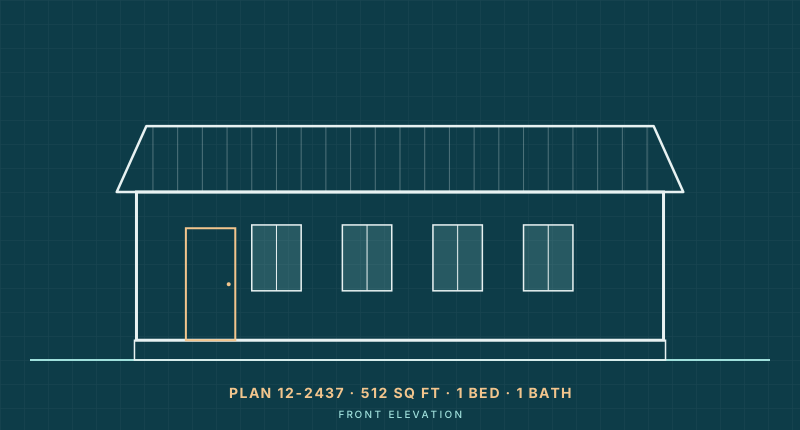
Plan 12-2437
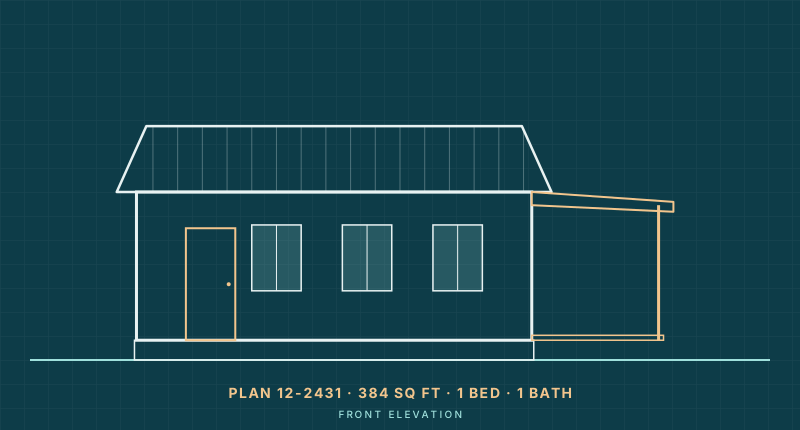
Plan 12-2431
Sometimes. A tiny home on a permanent foundation, on land you own, permitted and built to local code, may qualify. Appraisals and lender minimum loan amounts can be obstacles. Tiny houses on wheels usually do not qualify for mortgages and are financed more like RVs.
There is no single number. Requirements vary by lender and loan type, and a stronger credit history generally means better terms. Secured loans may be more forgiving than unsecured personal loans. Ask lenders for their specific requirements before applying.
Usually through a personal loan, savings or a home equity loan, because most lenders will not use an uncertified DIY tiny house as collateral. If the DIY home is on a permanent foundation, a construction loan may be possible with permits and a detailed plan.
Often, yes. Loans for tiny houses on wheels and unsecured personal loans typically carry higher rates and shorter terms than mortgages. The smaller loan amount can still make the total interest paid lower than on a full-size house.
It can be, if you have equity and stable income, because rates are usually lower than unsecured loans and you can draw funds as you build. The trade-off is that your main home secures the loan, so confirm ADU rules and budget carefully first.
General information only. Rates, terms and lender requirements change; confirm with lenders and a financial professional.
A complete Tiny Homes Blueprint plan gives lenders, builders and inspectors the detail they need.