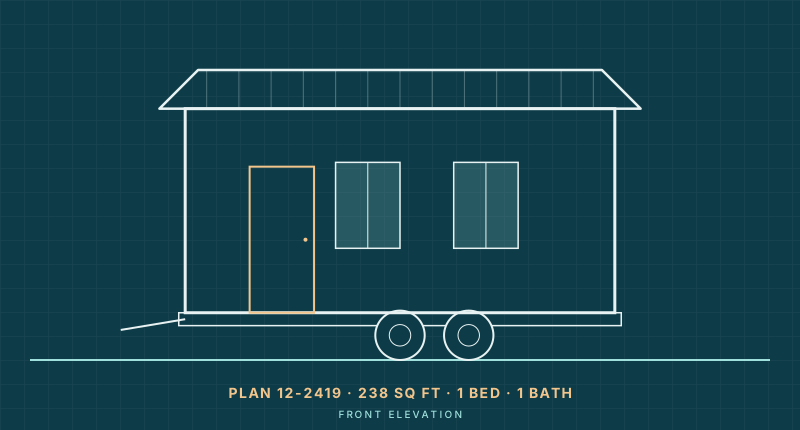
Plan 12-2419
The Wren: 20 ft Tiny House on Wheels with Sleeping Loft
- 238 sq ft
- 1 bed
- 1 bath
- On wheels
$395View plan

Building
Realistic timelines for builder, shell and DIY projects, a phase-by-phase tiny house build timeline, and the things that most often push a finish date back.
How long does it take to build a tiny home? A professional builder typically needs about 2 to 6 months once the design is final and the deposit is paid. A DIY build done on evenings and weekends often takes 6 to 18 months. Permits, material lead times, weather and the complexity of the design move you around within those ranges.
Those are realistic ranges, not the "built in a weekend" claims you sometimes see online. Below is a phase-by-phase timeline for both builder and DIY projects, an example schedule for a part-time build, and the factors that speed a project up or slow it down.
The biggest variable is who is doing the work and how many hours a week they put in. Size matters too: a 160 sq ft studio and an 800 sq ft cottage are both called tiny homes, as our guide to what a tiny house is explains, but they are very different projects.
For the full step-by-step process, from trailer to final finishes, our how to build a tiny house guide is the place to start. This post focuses on how long each part takes.
These are typical estimates for a simple tiny house of roughly 200 to 400 sq ft. Larger homes, custom features and off-grid systems take longer. Phases overlap in practice, so the totals are a little shorter than adding each line.
| Phase | Builder (typical) | DIY part-time (typical) | Notes |
|---|---|---|---|
| Design, plans and budget | Weeks, before build start | 2 to 8 weeks | Buying a finished plan shortens this a lot |
| Permits (foundation homes) | Weeks to months | Weeks to months | Depends entirely on your jurisdiction |
| Trailer or foundation | 1 to 4 weeks | 2 to 6 weeks | Trailer lead times vary; foundations need curing and inspection |
| Framing and sheathing | 1 to 3 weeks | 4 to 10 weeks | Walls, floor, roof structure |
| Dry-in: roof, windows, doors, wrap | 1 to 2 weeks | 3 to 8 weeks | Weather-tight shell is a key milestone |
| Rough electrical and plumbing | 1 to 3 weeks | 4 to 10 weeks | Inspections may apply; hire licensed trades where required |
| Insulation and interior walls | 1 to 2 weeks | 3 to 6 weeks | Ceilings and lofts are slow in tight spaces |
| Interior finishes | 3 to 8 weeks | 10 to 24 weeks | Kitchen, bath, flooring, trim, built-ins, stairs |
| Final checks and move-in | 1 to 2 weeks | 1 to 4 weeks | Final inspection, punch list, utilities |
Add up the builder column and you land around 2 to 6 months; the DIY column runs from roughly half a year to well over a year, which is why so many first-time builders underestimate the finish phase.
Here is what a 12-month, evenings-and-weekends build of a simple tiny house on wheels might look like. Your own schedule will differ, but the shape is typical: a fast-moving shell, then a long tail of interior work.
Add a contingency to your schedule the same way you would to your budget. If your plan says six months, tell yourself eight. Delays cost money too: storage, rent on your current home and loan interest keep running while the house is unfinished. Our tiny house cost guide covers the money side.
Simpler designs finish sooner, and at Tiny Homes Blueprint we would rather you finish a simple house than stall on an ambitious one. The first two plans below are compact, single-roof designs that suit a first build; the A-frame and the 32 ft gooseneck add complexity and time, but more character and space.
Plan 12-2419
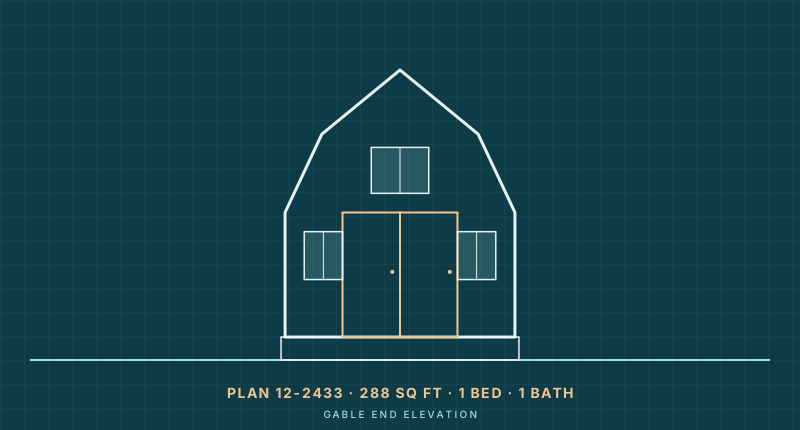
Plan 12-2433
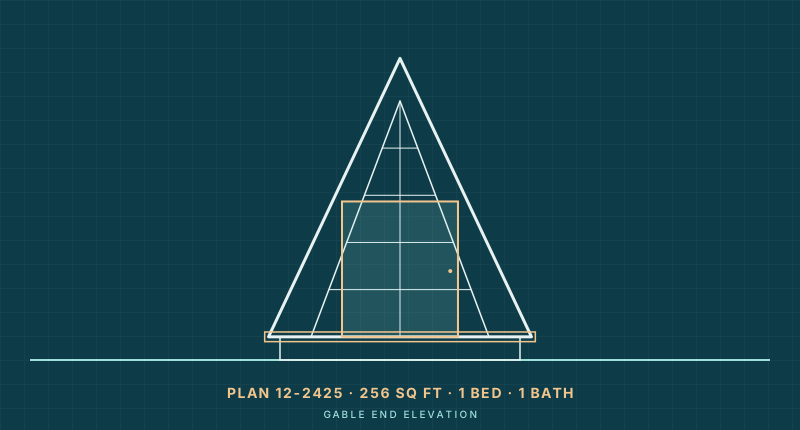
Plan 12-2425
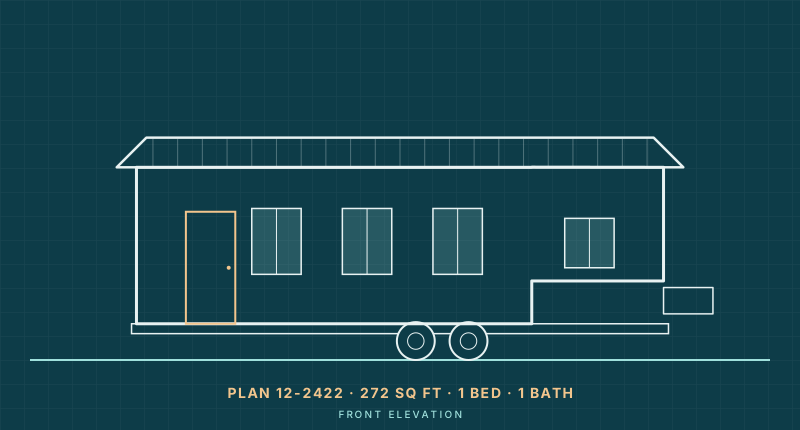
Plan 12-2422
Building on wheels? Check the trailer size guide before you order a trailer, since it is usually the first long-lead item. Still deciding on a design? See how to design a tiny home.
With a professional builder, typically about 2 to 6 months of construction once the design is final. A part-time DIY build of a tiny house on wheels often takes 6 to 18 months, depending on hours available, skills and design complexity.
A professional crew or a very experienced full-time builder may complete a simple shell quickly, but a finished, livable tiny home in a month is unusual. Most realistic timelines are several months, and longer for part-time DIY builds.
Interior finishes usually take the most time: cabinetry, the kitchen and bathroom, flooring, trim, stairs or ladders, and built-in storage. Tight spaces and custom details slow this phase down more than people expect.
For foundation tiny homes, yes. Permit review and inspections at set stages can add weeks or months depending on your jurisdiction. Many tiny houses on wheels are not subject to a building permit, but local rules vary, so check before you start.
Often for the structural phases, because parts arrive precut. The interior, systems and finishes still take similar time. Compare cost and scope before choosing, since kits limit design changes.
Timelines are typical estimates. Your schedule depends on design, skills, weather, permits and suppliers.
Tiny Homes Blueprint plans cover tiny houses on wheels, cabins, cottages and ADUs, ready to price and build.