
Building
Which Mini Excavator Size Fits Tiny Home Land Prep?
How to match a mini excavator to your tiny home site: pads, footings and piers, utility trenches, septic and driveways, sized to the foundation your plan calls for.
- About 1 ton: piers, pads and trenches
- 2 to 2.5 tons: clearing, slopes and driveways
- 3 to 4 tons: septic and deep digging
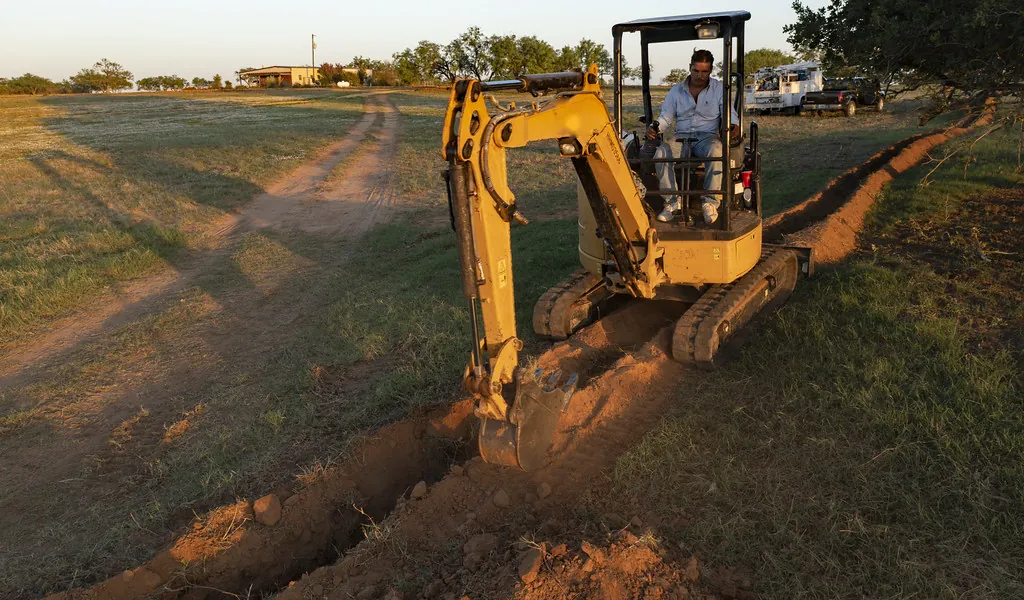
A tiny home is small. The dirt work under it is not. Before your house arrives on a trailer, or before the first wall goes up from your plan set, you need a level pad, a way to get water and power to it, a place for wastewater to go, and a driveway a truck can back a trailer down. A mini excavator does nearly all of that, but the right size depends on your lot, your soil, your foundation type and how you plan to get the machine there.
Most tiny home budgets focus on framing, windows and finishes. Site work is the line item that surprises people, and it is where the right machine saves the most time and money. Here is how to match the excavator to the tiny home you are actually building, before you rent, borrow or hire.
The three size classes
Mini excavators are grouped by operating weight. For a tiny home site, three rough classes cover almost everything:
| Size class | Typical digging depth | Best tiny home jobs | Watch out for |
|---|---|---|---|
| About 1 ton | Around 5 to 6 feet | Footing holes, pier holes, utility trenches, tight backyard sites | Slow on clay, stumps and large pads |
| About 2 to 2.5 tons | A little deeper, more reach | Clearing brush, cutting slopes, driveways, long trench runs | Needs a braked equipment trailer |
| About 3 to 4 tons | Often 9 to 11 feet, depending on model | Septic tanks, deep frost-line work, big grading jobs | Wider tracks, heavier towing setup |
Weight matters more than engine size. A heavier machine stays planted when the bucket hits hard ground. A light one lifts its nose and stalls the job.
Start with your foundation, not the machine
The fastest way to narrow the size is to look at how your tiny home will sit on the land. A tiny house on wheels, a cottage on piers and a container home on footings each ask for different dirt work.
| Tiny home type | Usual foundation | Main dirt work | Suggested starting size |
|---|---|---|---|
| Tiny house on wheels | Gravel pad with jacks or blocks | Pad, driveway, utility trenches | 2 to 2.5 tons for the driveway; 1 ton if access is already good |
| Tiny cottage or small cabin | Concrete piers or a small slab | Footing holes, pad grading, trenches | 1 ton for piers; 2 to 2.5 tons if the lot needs clearing |
| A-frame cabin | Piers or a perimeter footing | Footings, often on sloped or wooded lots | 2 to 2.5 tons for slope cuts and stumps |
| Shipping container home | Piers or strip footings | Footings, delivery access, trenches | 2 to 2.5 tons |
| Backyard ADU | Slab or perimeter foundation | Footings, trench from the main house | 1 ton for gate access |
| Shed-to-tiny-house conversion | Gravel pad, skids or blocks | Pad prep, utility trenches | 1 ton in most cases |
| Small farmhouse on acreage | Slab, crawlspace or perimeter footing | Clearing, long driveway, septic | 3 to 4 tons, or 2.5 tons plus a septic contractor |
If your plan set includes a foundation plan, read it before you call the rental yard. Footing depths, pier spacing and slab dimensions tell you how much digging is really ahead.
Job 1: Clearing and leveling the pad
Most tiny homes sit on a gravel pad, concrete piers, a slab or a set of skids. All of them start the same way: strip the topsoil and roots, then cut and fill until the site is level and drains away from the house.
For a typical tiny home footprint, a 1-ton machine can do this, just slowly. If the lot has brush, small trees or a noticeable slope to cut back, a 2 to 2.5 ton machine moves the extra dirt in a fraction of the time and handles stumps much better.
A few tips that save a lot of rework:
- Stack the topsoil separately. You will want it back later for grading and grass around the house.
- Build the pad up, not down. A pad that sits a few inches above the surrounding grade sheds water. One dug into a hollow becomes a puddle.
- Make the pad bigger than the house. Leave room for steps, a porch or the hitch end of a trailer, so you are not standing in mud at the door.
For a tiny house on wheels, the trailer's weight rests on only a few jacks or blocks, so soft spots in the pad show up fast. Compact the gravel well.
Job 2: Footings and piers
If your tiny home sits on piers or a permanent foundation, each footing has to go below your local frost line. That depth varies a lot, from a few inches in the Deep South to 4 feet or more in the northern states. Your county building office will tell you the number for your address.
Footing holes are where small machines shine. A 1-ton excavator with a narrow bucket digs a clean, square hole without disturbing the ground around it, which matters because footings want to bear on undisturbed soil.
- Lay out with string lines first. Mark every footing from your foundation plan and check that the diagonals match before you dig.
- Ask about inspections. Many counties want to see open footing holes before concrete goes in.
Container homes and A-frames often sit on fewer, larger footings than a cottage on piers. A 2 to 2.5 ton machine handles those bigger holes with less effort, especially in clay.
Job 3: Trenching water, power and sewer
This is often the biggest dirt job on a tiny home lot. A water line has to stay below the frost line so it does not freeze. Electric conduit has its own minimum burial depth under the electrical code your area follows. Sewer lines need a steady downhill slope from the house to the tank or the city tie-in.
| Line | What sets the depth | What to plan for |
|---|---|---|
| Water | Local frost line | Often the longest, deepest run on a rural lot |
| Electric | Electrical code your area follows | Ask your inspector about conduit type and depth |
| Sewer | Steady downhill slope | Depth at the house sets depth at the tank or tie-in |
A 1-ton machine with a narrow trenching bucket handles most of this. It leaves a tidy trench, limits backfill and fits between trees and fences. Step up to the 2 to 2.5 ton class if you face long runs, rocky ground or deep frost lines near the limit of a small machine's reach.
A backyard ADU usually ties into the main house's utilities, so the trench may cross a lawn or run near a patio. A 1-ton machine on rubber tracks does the least damage.
Before any of it, call 811. It is the free national call-before-you-dig number, and most states ask for a few working days' notice so utilities can mark their lines. Hitting a buried gas or fiber line is dangerous and expensive.
Job 4: Septic
If you are off the sewer system, the septic tank and drain field are the deepest and heaviest digging on the site. Tank holes can run well past 6 feet. In most places, septic systems need a permit and a soil test from the county health department, and many require a licensed installer.
Even if a pro installs the system, knowing the depth helps you plan. A 1-ton machine usually cannot reach a tank hole. The 3 to 4 ton class is the realistic minimum for septic work.
Plan your pad and driveway around the drain field. Once it is in, you should not park, build or drive heavy equipment over it.
Job 5: The driveway and drainage
A tiny home on wheels has to be backed into place, and a delivery truck needs firm ground to do it. Cutting a driveway, crowning it so water runs off, and digging a ditch or a culvert crossing are all excavator work. A 2 to 2.5 ton machine is a good fit here, especially paired with a dozer blade for spreading gravel.
Plan the driveway around the longest vehicle that will use it. A tiny house on wheels plus its tow vehicle needs room to swing and back straight onto the pad. Container homes arrive on tilt-bed trucks or by crane, and foundation builds need access for concrete and lumber deliveries.
Will it fit, and can you haul it?
Two measurements often decide the size for you.
Access width. Measure the narrowest point between the road and the build site: a gate, a gap in the trees, a path between buildings. Some of the smallest machines pull their tracks in to around 3 feet wide. The 3 to 4 ton class is usually closer to 5 feet.
Towing. Add the machine's weight to the empty trailer's weight. That total must fit under the trailer's rating, your truck's towing capacity and the truck's combined weight rating, all listed on the door sticker or in the owner's manual.
| Machine class | Typical trailer | Typical tow vehicle |
|---|---|---|
| About 1 ton | Sturdy utility trailer | Many half-ton pickups |
| About 2 to 2.5 tons | Braked equipment trailer | Truck rated comfortably above the total |
| About 3 to 4 tons | Heavy equipment trailer | Usually a 3/4-ton or one-ton truck; machine plus trailer can pass 10,000 pounds |
Check your state's rules on trailer brakes and registration at that weight. Chain the machine down at four points with the bucket lowered to the deck, every trip.
Rent, borrow or hire?
- Rent and do it yourself for pad prep, footings and trenching on reasonably flat ground. A weekend rental often covers a simple tiny home site.
- Hire an operator for slopes, rocky ground, big clearing jobs or tight spaces near buildings.
- Leave septic to the installer in most cases, since permits often require it.
Safety on a small lot
- Work slopes straight up and down, never across. Small machines are light and tip on side slopes.
- Keep the bucket low when traveling.
- Stay back from trench edges. OSHA requires protective systems for trenches 5 feet deep or more on work sites, and the soil collapses the same way on your own land.
- Look up. Overhead power lines to an old building are easy to miss when you are watching the bucket.
Tiny home site prep checklist
Before the machine shows up
- Confirm zoning and pull permits for the house, septic and driveway
- Get your frost-line depth from the county building office
- Review your foundation plan for footing sizes and spacing
- Call 811 and wait for utility marks
- Measure the narrowest access point and check truck and trailer ratings
- Stake out the pad, drain field, trench routes and driveway
The short answer
If your tiny home sits on a gravel pad or piers, with utility trenches on easy ground, a 1-ton machine will do the work and fit almost anywhere, including most backyard ADU and shed conversion sites. If you have brush to clear, a slope to cut, a long driveway for a tiny house on wheels or long trench runs, step up to about 2 to 2.5 tons. If there is a septic system in the plan, you are in 3 to 4 ton territory, or that part of the job goes to the installer.
Start with your foundation plan, measure the gate, check the truck, call 811, and the choice mostly makes itself.
Frequently Asked Questions
What size excavator do I need for a tiny house on wheels?
The gravel pad is light work for a small machine. The driveway is usually the bigger job, so many owners choose the 2 to 2.5 ton class.
Do I need an excavator for a shipping container home?
Usually, yes. Containers sit on piers or strip footings that must reach the frost line, and the site needs firm access for delivery.
Should I prep the site before or after choosing tiny house plans?
Choose your plan first. The foundation type, footprint and utility locations in the plan set decide where and how deep you dig.
Depths, weights and towing figures are typical ranges. Check the specs of the exact machine, trailer and truck you use, and confirm permit and code requirements locally.
Keep reading
Pick the plan, then prep the site
Tiny Homes Blueprint plans cover tiny houses on wheels, cabins, cottages, container homes and ADUs, with the foundation details your dirt work depends on.